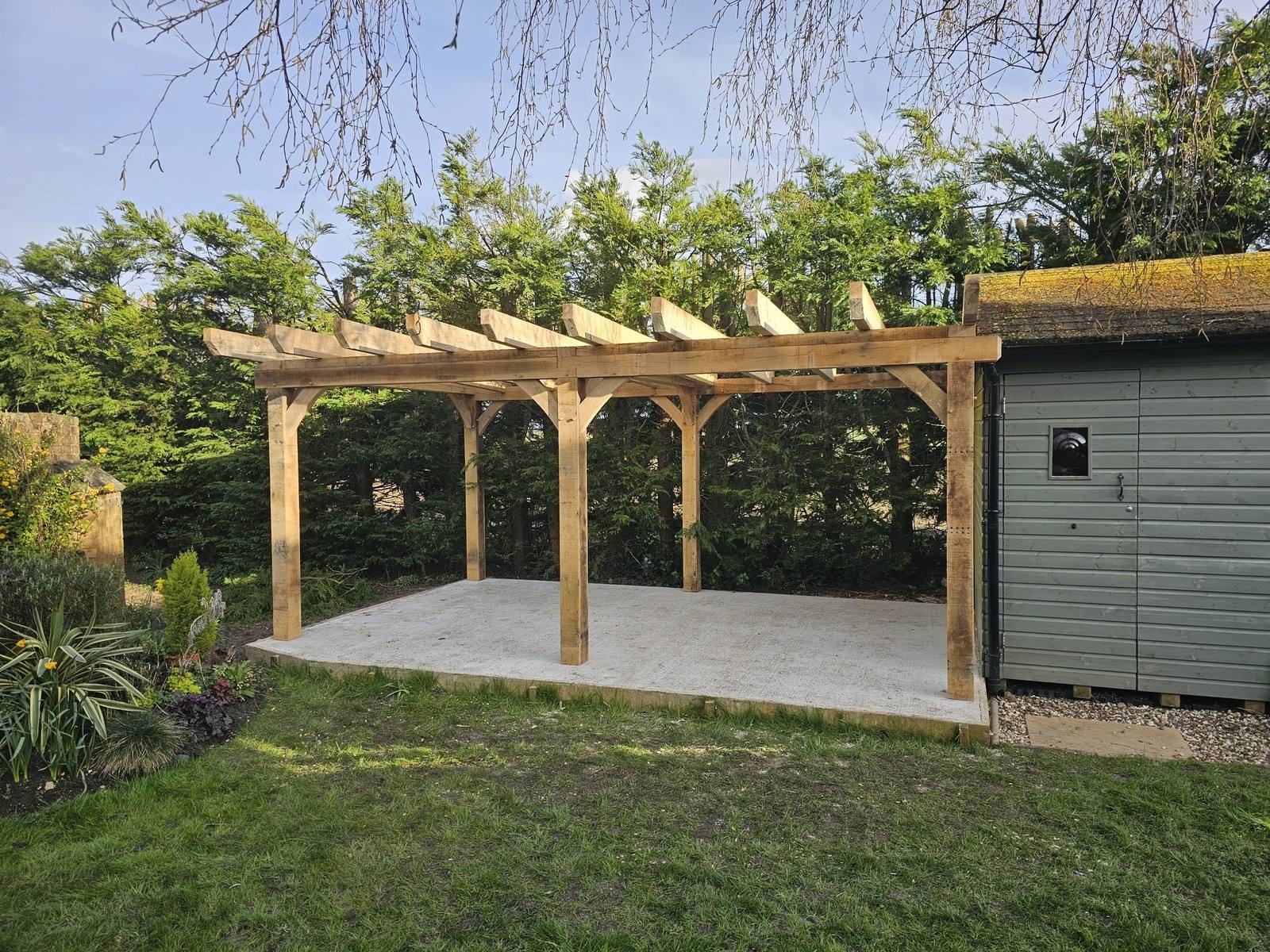
Green oak and seasoned oak need different care. Green oak weathers naturally to silver-grey and needs no finish. Seasoned oak can be treated with oil or left to weather. Both types used in bespoke oak frames benefit from regular inspection and minor repairs. The choice depends on the look you want and how much maintenance suits you.
What exterior oak actually needs
Oak used in bespoke oak frames for garages, carports and garden rooms comes in two forms: green oak and seasoned oak. Green oak is freshly felled timber with moisture still in the wood. It will crack and move as it dries, and this is normal. Seasoned oak has been dried already, so it is more stable. Neither needs a protective finish to last. Both will weather to a soft silver-grey colour over time, a look many owners prefer because it sits naturally in a rural setting.
The timber itself is dense and durable. Oak heartwood resists rot and insect damage far better than softwood. What matters over time is not the oak itself but the details: the joints stay tight, the gutters and downpipes drain properly, and any water that lands on the wood drains away instead of pooling. A well-designed oak frame with proper pitch on the roof and good ventilation underneath will outlast frames that look the same but were built without this care.
The difference between green oak and seasoned oak maintenance
Green oak will move as it loses moisture. Cracks in the wood are expected and not a defect. They usually appear in the first year and then stabilise. The battens underneath the roof are graded and treated to BS 5534 standard, so they are protected from the start. The visible oak frame itself needs no finish. You can leave it bare to weather naturally, or apply a clear finish if you want to slow the greying, but neither choice affects the wood's durability.
Seasoned oak is already dry and stable. It will not move or crack as much as green oak. You have a real choice here: leave it to weather and grey naturally, or treat it with an oil finish to keep the warm honey colour longer. If you choose to oil it, the first treatment typically happens after the timber has weathered for a few months, and then every two to three years depending on exposure and the product used. Some owners prefer the greyed look and choose not to treat it at all.
Why regular inspection saves money
The biggest cost over time comes not from treating the wood itself but from letting small problems grow. A joint that stays tight, gutters that do not leak, and roof coverings that shed water properly are what keep oak frames standing for generations. Check the frame twice a year: after winter and before summer. Look for pooled water anywhere on the roof or around the joints. Check that gutters and downpipes are clear. Look at the battens underneath the roof to make sure they are not holding moisture. Most of what you will see will be dirt or leaves, which are easy to clear.
If you find soft wood or active rot, the repair is straightforward if caught early. A rotten section of batten is replaced. A joint that has absorbed water is dried out and treated. These are not expensive when they are small. They become expensive and risky when they are ignored for years. The battens are specified to BS 5534 standard, which means they are graded and treated to resist rot. The stainless steel fixings (316 marine-grade, 2.7mm powder-coated) do not rust. So the frame itself is built to last. Your job is to keep water moving away from it.
What finishes work for exterior oak
If you want to keep the colour, three types of finish work for exterior oak. An exterior-grade oil soaks into the wood and brings out the grain. It slows weathering but does not stop it completely. It needs reapplication every two to three years. A water-based finish sits on top of the wood and creates a protective layer. It needs refreshing more often but some owners find it easier to apply. A traditional wax finish gives a subtle sheen and is labour-intensive but beloved by craftspeople who like hands-on care. None of these finishes make the oak last longer than leaving it bare. They all cost time and money. They all change the appearance of the frame.
Many owners of bespoke oak frames choose to leave the timber bare. The wood weathers to a pale silver-grey within a few years, and this colour is stable and restful against most backgrounds. The wood is still working underneath: it is breathing, moving slightly, and shedding water. Nothing needs doing except the twice-yearly inspection and clearing gutters. If you love the natural oak colour, treat it. If you like the weathered silver-grey, leave it alone. Either choice is right if you understand what you are choosing.
How to spot trouble early
Soft wood, water stains, or discolouration in a joint usually signal moisture that has been there too long. Press gently with a tool or a fingernail. Oak is hard; soft wood means rot has started. Stains that do not disappear when the wood dries mean water is pooling somewhere. Look uphill from the stain to find where the water is coming in. Usually it is a gutter that is blocked, a roof area that is not draining properly, or a joint that is absorbing splash from the ground. Fix the water problem first, and the wood will recover if you catch it early.
Gaps between timbers are normal and not a sign of failure. Oak moves seasonally. In winter when the air is dry, it shrinks slightly and gaps widen. In spring and summer when moisture returns, the gaps close a little. If a gap is wider than the thickness of a coin and stays that way through the seasons, water may be collecting there. A gap that gets wider every year signals a structural issue that needs an expert eye. Most movement is normal; extreme movement is not. When in doubt, take a photograph and ask.
The real cost of leaving exterior wood untreated
Untreated does not mean unmanaged. It means you are not applying a finish, but you are still inspecting and you are still keeping water away from the timber. If you skip both the finish and the inspection, small problems become large ones. A leak in a gutter that you do not notice will eventually rot a batten underneath. A joint that absorbs water will soften if the water is not driven out. By the time the damage is visible from the ground, the repair is more invasive and more costly than catching it early. You lose months while the repair is planned and completed. You cannot use the garage or carport during the work.
An oak frame that is inspected twice a year and has gutters that are kept clear will need no major repairs for decades. One that is left to drain poorly and ignored will need structural work within five to ten years. The difference is not the wood: it is the attention. If you do not want to inspect or maintain, then treat the wood with a finish and inspect less often. If you want to leave the wood to weather naturally, you must commit to the twice-yearly check. Neither path is wrong; each has a real cost in time or money. Choose the one that fits your life.
What Will does on site to protect your oak frame
From the start, every bespoke oak frame is built to shed water. The battens are graded and treated to BS 5534 standard before they leave the workshop. The stainless steel fixings (316 marine-grade, 2.7mm powder-coated) are chosen for corrosion resistance. The roof slope is pitched to drain properly. Gutters and downpipes are sized and positioned to clear water quickly. The frame is finished with natural slate borders where the brief allows, and every joint is engineered so water cannot sit in it. These are not finishes applied after the fact. They are built into the frame.
After the frame is installed, you have a choice. You can leave the oak bare and let it weather to silver-grey. You can treat it with an oil or other finish. Either way, the frame is designed to outlast the finish. Your job is to inspect it twice a year and keep the gutters clear. That is the maintenance a bespoke oak frame needs. It is not onerous, but it is real. When you are ready to discuss the frame you want and how you will look after it, get in touch with William.